


Protecting Your Equipment and Preparing for Robots.
Flash Floor repairs uneven concrete and worn control joints / expansion joints to create a smooth, level surface. This protects forklift wheels, reduces maintenance costs, and prepares facilities for automated robotic systems.
-
Repairs floors to a smooth, even surface
-
Eliminates damage to load wheels
-
Creates robot-ready transitions
The Best Option for Forklifts
Uneven slabs and worn control joints and expansion joints create repeated impact on forklift wheels, leading to premature wear, safety concerns, and costly replacements. Many facilities spend thousands of dollars each year repairing equipment damage that could be avoided by correcting floor conditions.
Flash Floor restores smooth travel paths, reducing vibration and impact while extending the life of wheels, bearings, and material-handling equipment.
Get the Most Value from Your Investment
Epoxy vs. Flash Floor
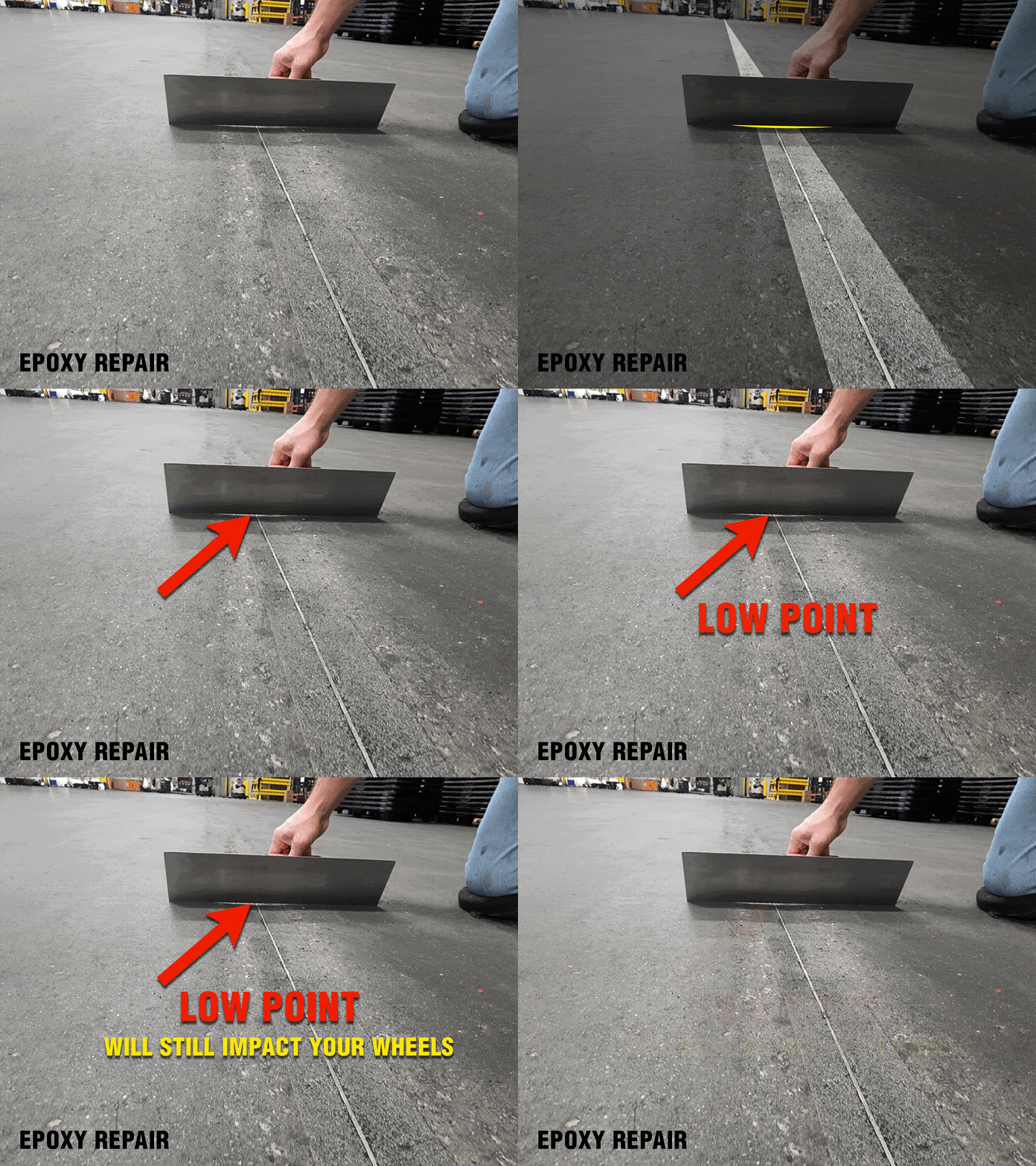
Not all floor repairs are created equal. Traditional epoxy repairs often leave low points within control joints / expansion joints, creating uneven transitions that continue to impact load wheels. Over time, this impact causes accelerated wheel wear and ongoing equipment damage. Epoxies also continue to harden after installation, becoming brittle and prone to failure.
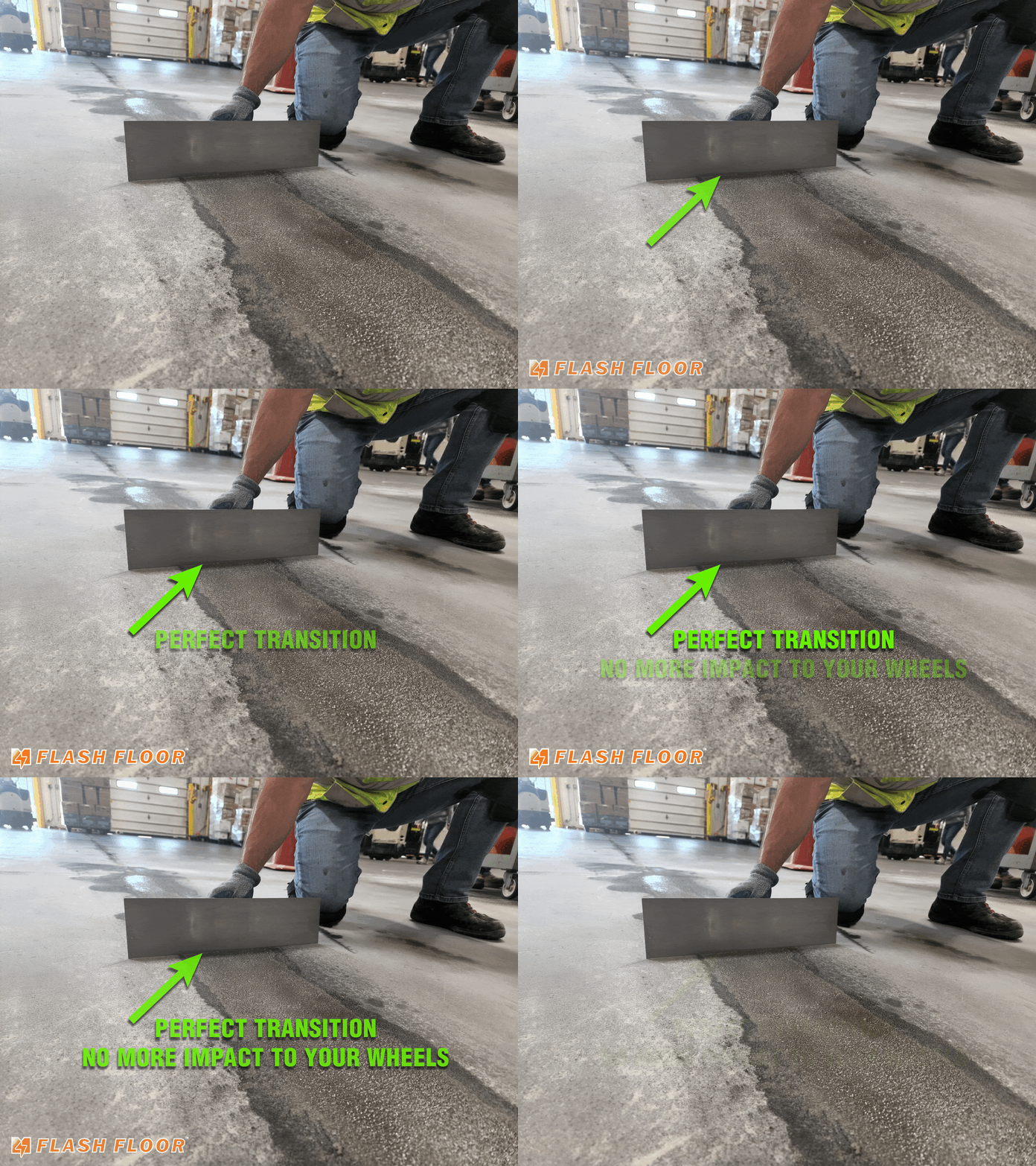
Flash Floor bridges gaps and uneven surfaces within control joints and expansion joints, creating a smooth, continuous transition forklifts can travel over without impact. In addition to adhesive bonding, Flash Floor’s thin, water-like viscosity allows it to penetrate deep into the pores of the concrete, creating a strong mechanical bond that conventional epoxy repairs cannot achieve.
Why Flash Floor Makes the Difference
-
No saw cutting required
-
No minimum depth
-
Can be feather-edged thinner than a grain of sand
-
Eliminates low points in control joints / expansion joints that damage equipment
The result is a seamless repair that restores the floor surface rather than simply filling the joint.
More Epoxy, More Problems
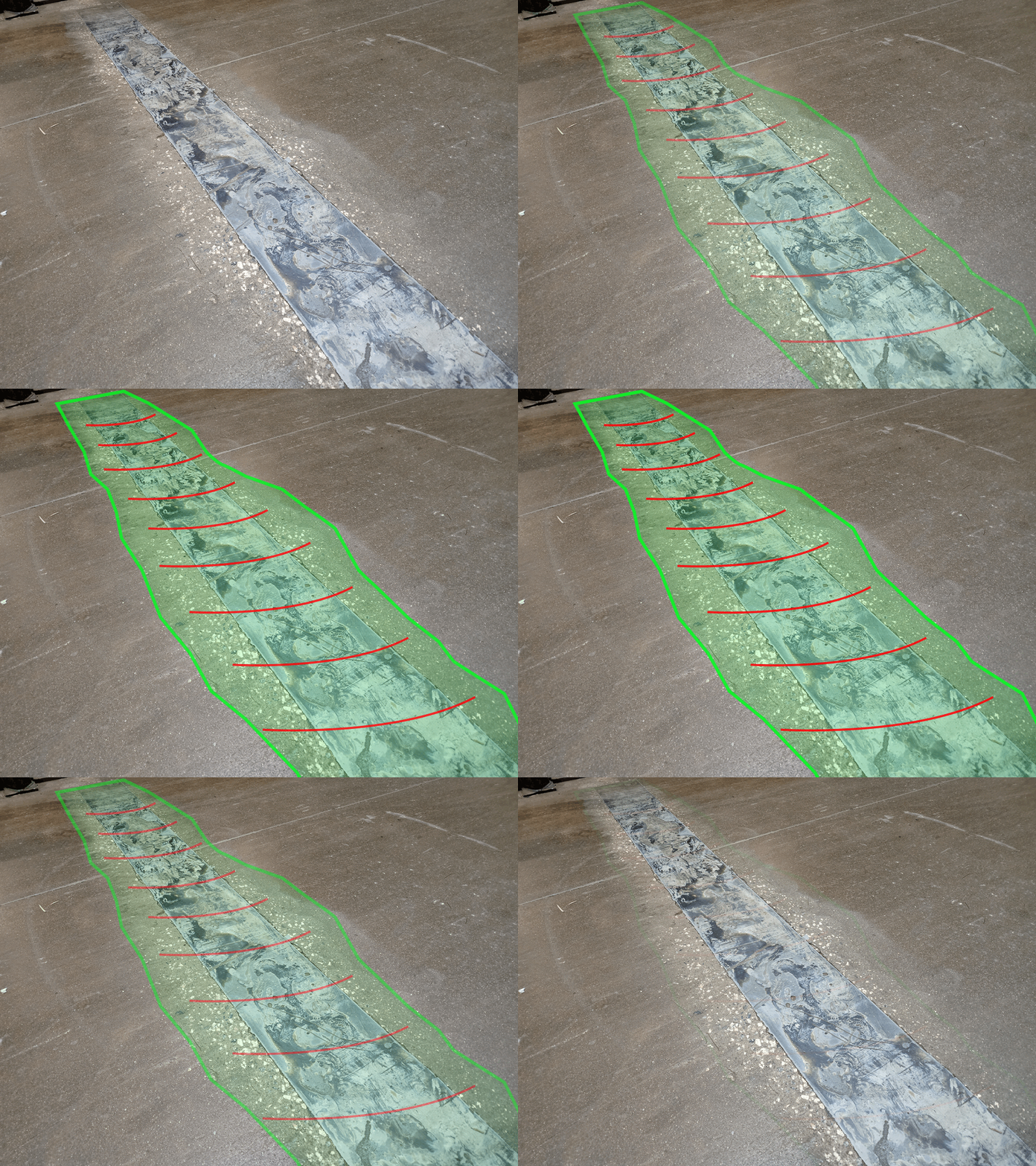
The example below shows a failed epoxy repair in a control joint / expansion joint. When epoxy fails, the joint must be recut, widening it unnecessarily. Over repeated failures, what was once a single control joint or expansion joint becomes a rigid mini-slab, splitting into two new joints.
These additional joints create more impact points for load wheels. As highlighted in green, the epoxy surface is not perfectly smooth, causing wheels to impact the concrete wear the surface it down. This worn area has created a dip in the slab—essentially a reverse speed bump—that increases impact and accelerates wheel and equipment damage.
Each successive epoxy repair worsens this cycle, leading to more concrete wear, more impact points, and more frequent failures.
Flash Floor: Seamless Repair

This example shows a worn control joint / expansion joint repaired with Flash Floor. No saw cutting was required, and the repair size remained consistent. The before-and-after clearly shows that the joint was not widened and no additional damage was created.
Flash Floor provides a smooth, seamless transition from slab to slab across control joints and expansion joints, eliminating impact points and preventing further wear to the concrete and equipment. The joint remains intact, the surface stays flat, and long-term performance is restored.
Preparing for Robotic Systems
Automated robotic systems require consistent, smooth floor conditions to operate reliably. Even small surface irregularities at control joints or expansion joints can disrupt navigation, reduce efficiency, and increase maintenance.
Flash Floor creates the flat, even transitions robots need, with a 15-minute (at ~70°F) cure time that minimizes downtime and keeps your operation moving.
Flash Floor repairs damaged concrete control joints, expansion joints, and worn slab transitions in warehouses, distribution centers, and manufacturing facilities.